
RUNNER-SPECIFIC PHYSICAL THERAPY
Get back to running with a plan built for you.
Symptoms, movement, training load, strength, mobility, recovery and goals all matter. Bring those pieces together in a one-on-one evaluation designed around the demands of running.
THE BIGGER PICTURE
Break the cycle of push, rest and start again.
When pain keeps returning, runner-specific physical therapy looks beyond the symptom to understand why the area may be overloaded and what your body needs to tolerate running well.
The objective is to reduce symptoms while building the strength, movement options and training progression required for the next phase of your running.
LOOK
Beyond the painful area
Connect symptoms to movement, load and the full training week.
BUILD
Capacity that transfers
Prepare for thousands of steps, fatigue, terrain and speed.
RETURN
With a clear progression
Know what to change, what to keep and when to advance.
COMMON RUNNING PROBLEMS
When running hurts—or keeps getting interrupted.
An evaluation connects your symptoms to your individual history. These categories help you recognize when a runner-specific assessment may be useful.
—
Knee
Runner’s knee & kneecap pain
—
Foot
Plantar fasciitis & heel pain
—
Ankle
Pain and instability
—
IT Band
Lateral knee discomfort
—
Shin
Recurring shin splints
—
Mileage
Pain as volume rises
—
Achilles
Tendon & calf pain
—
Hip
Hip, glute & hamstring pain
—
Plan
Uncertainty about running
WHY RUNNER-SPECIFIC PHYSICAL THERAPY
Your sport changes what “ready” means.
A runner needs to tolerate repeated loading over thousands of steps, changing terrain, hills, speed, fatigue and the demands of a real training week.
Current training load
Strength and mobility
Running mechanics
Distance and terrain
Previous injury pattern
Impact tolerance
Recovery and progression
Pace and event goals
The clinic test matters. The return to running matters more.
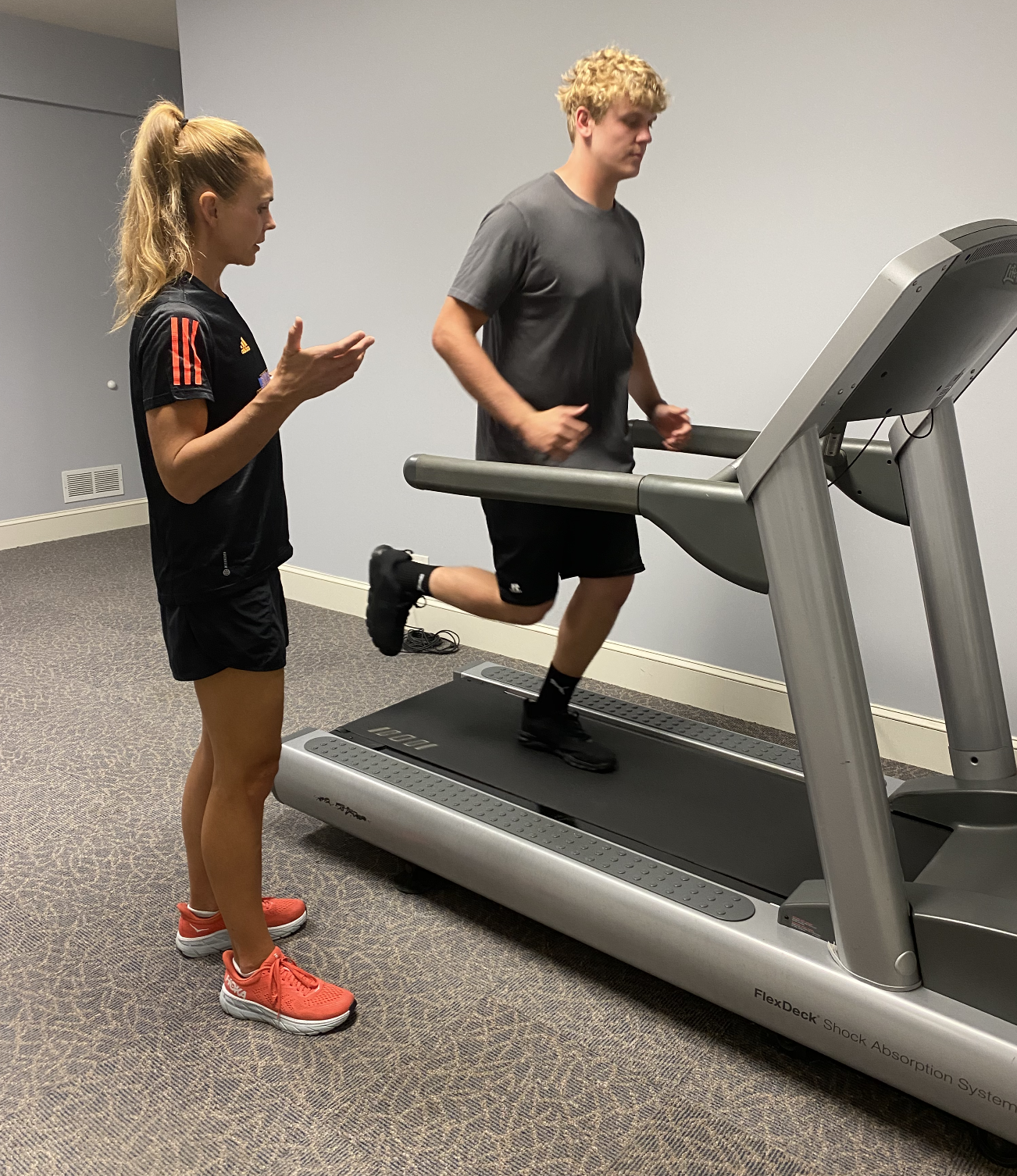
THE TREATMENT PATH
Progress that connects back to running.
The phases overlap and adapt to you. The goal is a practical progression—not a one-size-fits-all timeline.
Calm
Address irritability, adjust loads and keep you moving safely when possible.
Rebuild
Improve the strength, mobility, control and tolerance your body needs.
Reintroduce
Progress walking, running, hills, speed, terrain or distance.
Return
Build confidence, resilience and a clearer understanding of your body.